

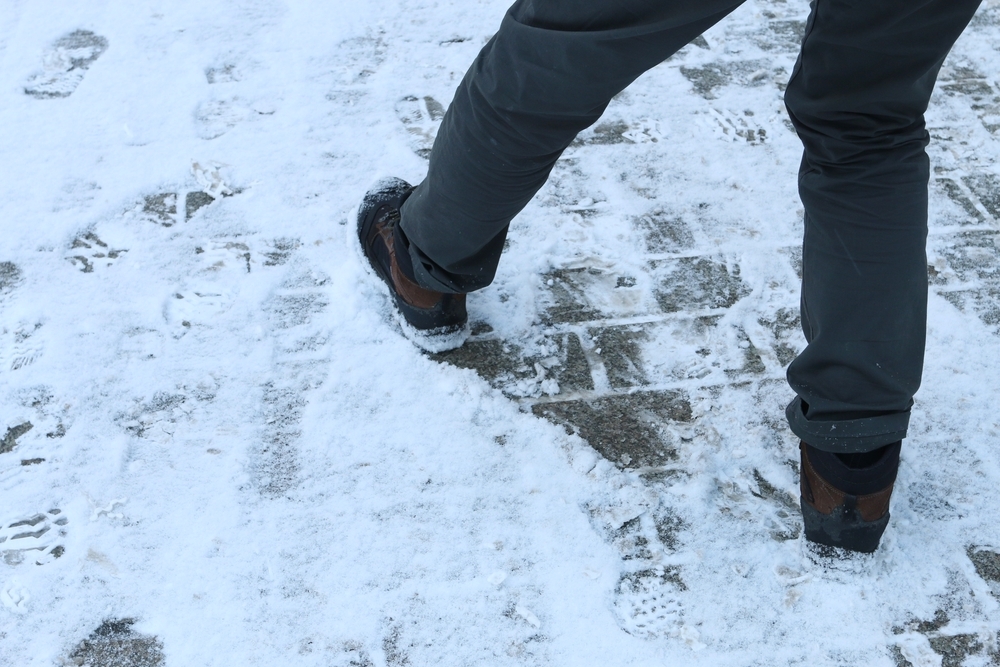
After a significant winter storm, navigating a New Jersey slip and fall on ice can be just as treacherous as the weather itself. If you recently slipped on ice in a New Jersey parking lot or on a sidewalk, the sudden physical and financial burden can feel overwhelming. Beyond the mounting medical expenses, a serious injury often means missed paychecks and the inability to keep up with your daily responsibilities. Finding an experienced New Jersey slip and fall lawyer can help provide guidance to navigate the complexities of premises liability while you focus on getting back on your feet.
Whether it happened at a shopping center parking lot, on a sidewalk outside a business, or even in front of a property you visit often, you deserve to understand when the property owner, manager, or other responsible party may be legally liable.
Premises liability law in New Jersey does not make property owners absolute ensurers of your safety. Instead, the party responsible for the area where the fall occurred must act with reasonable care, and that duty depends on who controlled the location and whether the property is commercial, residential, or public. If they fail to do so and that failure leads to an injury, they may be held accountable for your damages.
In this article, we explain when a property owner may be liable for a winter slip and fall, the legal standards that apply, and what you should do if you are injured.
Legal Standards: The Core Principles of NJ Premises Liability
In New Jersey, slip and fall claims from icy conditions are evaluated under premises liability principles. This means that liability depends on whether the property owner, manager, or other responsible party failed to take reasonable steps to keep their property safe for people who lawfully enter it.
The Ongoing Storm Rule
New Jersey applies the "ongoing storm rule" to commercial landowners. This generally means they are not required to remove snow or ice while a storm is actively in progress or conditions remain reasonably continuous. However, this rule is not absolute. Liability may still exist if:
- The ice was pre-existing: The hazard was left over from a storm days prior and should have been cleared.
- The owner’s actions increased the risk: Specific conduct, such as negligent plowing or piling snow in a way that creates a new drainage hazard, made the area more dangerous than the storm alone.
After the storm ends, the party responsible for the area must take reasonable steps to remove or reduce snow and ice hazards, as measured by what a reasonably prudent person would do under the circumstances.
Varying Duties of Care Based on Property Classification
Where your slip occurred influences the legal obligations of the property owner.
Commercial Property Sidewalks and Parking Lots
Owners and operators of commercial properties typically have heightened responsibilities because they invite customers, clients, and visitors onto their premises. In these settings, the law generally expects owners to regularly inspect walkways, parking areas, and entrances and to take reasonable steps to reduce hazards once winter weather ends.
New Jersey Supreme Court rulings have extended this duty to all commercial landowners, including those who own vacant or non-income-producing lots. For example, a supermarket, retail center, pharmacy, or office building (or even the owner of an unimproved commercial lot) that fails to plow, salt, or sand icy conditions may face liability if someone is injured. Commercial property invitees are among the classes of visitors owed the greatest duty of care.
Residential Sidewalks and Shared Walkways
Rules for residential property owners are different. In New Jersey, the owner or occupant of a residential property is generally not responsible for defects or hazards on an abutting public sidewalk caused by the elements, such as snow and ice. However, liability may arise if a residential owner’s actions create the hazardous condition or make it worse, such as negligent construction, drainage issues caused by the owner, or snow removal that increases the danger.
While local ordinances may require removal within a certain time after a storm, merely violating an ordinance does not by itself create a private right to sue unless negligence is also shown.
Municipal and Public Property
If you slip on a public sidewalk or government-owned area, the New Jersey Tort Claims Act governs the claim, which involves different rules than private cases because it includes specific notice requirements and potential immunities.
The Act’s weather-immunity provision applies to injuries caused solely by weather conditions on streets and highways, and does not by itself eliminate liability for icy conditions on sidewalks or parking areas adjacent to property.
Claims against municipalities require strict, timely notice. A notice of claim generally must be presented within 90 days of the accident. While there is a small window to file a late notice (up to one year), courts only permit this under extraordinary circumstances. Simply being unaware of the 90-day rule does not qualify as an extraordinary circumstance, making early action essential.
Whether a public entity can be responsible often turns on whether a dangerous condition of public property existed and whether the entity’s failure to protect against it was palpably unreasonable.
Slipped on Ice in a New Jersey Parking Lot? When Negligence Overrides Weather
Liability is always fact-specific, but the following circumstances commonly support a claim:
Failure to Act After the Storm Ends
A commercial owner may be responsible if they leave a parking lot or sidewalk untreated for a long period after a storm. In New Jersey, what is considered a ‘reasonable time’ after a storm depends on factors such as the severity of the weather, the volume of foot traffic, and whether the hazard was foreseeable or existed before the storm began.
Known Recurring Ice Hazards
If the property routinely develops ice due to drainage issues or structural problems and the owner fails to address the root cause, the risk may be foreseeable and actionable.
Hazard Created by Owner Action
If an owner’s snow removal or salting efforts inadvertently create a new danger, liability can follow. For example, piling snow where it blocks drainage and leads to refreezing across pedestrian paths can create hazards the owner should have anticipated.
Inadequate Inspection or Warning
Simply walking away from icy areas without inspection, maintenance, or warnings may be unreasonable in high-traffic locations.
Elements of Proof Required to Establish a Slip and Fall Injury Claim
To recover compensation, you generally must show:
- A dangerous condition existed due to ice or snow.
- The owner had a legal duty to maintain the area in a reasonably safe condition.
- The owner created the hazardous condition, or knew about it, or should have known about it through reasonable inspection.
- The owner breached that duty by failing to take reasonable action to remove the hazard or warn of it.
- The breach caused your injury and measurable harm, such as medical expenses or lost income.
Because New Jersey follows modified comparative negligence, your recovery is reduced by your percentage of fault. In New Jersey, you can still recover damages as long as your share of the fault is not greater than 50 percent. If a jury finds you were 51 percent or more responsible for your own injury, you will be barred from recovering any compensation.
What to Do After a Winter Slip and Fall in New Jersey
Your actions after a fall can significantly impact your ability to protect your rights:
- Get medical care right away: Some injuries appear mild at first but later worsen. Prompt documentation of injuries also supports your claim.
- Document the scene: Take photographs of the ice, surrounding conditions, lack of salt or sand, slope or surface defects, and any hazards that contributed. Weather records can also be obtained to show conditions at the time.
- Gather witness information and report the incident: If others saw your fall, their accounts may help. Report the incident to the property owner or manager and request a copy of any incident report.
- Preserve evidence: Keep the clothing, shoes, and any items from the day of the fall. These can be valuable if there are disputes about how the fall occurred.
- Contact an attorney promptly: Because deadlines vary by property type and because evidence deteriorates quickly, consulting an attorney early can make a meaningful difference in the strength of your claim.
Why We Handle These Cases Differently at Sadaka Law
Winter slip and fall cases can be deceptively complex. Ice and snow change conditions rapidly, and insurers will often use timing rules, weather data, and procedural defenses to minimize payouts. At Sadaka Law, as New Jersey slip and fall lawyers, we combine evidence-based investigation, careful documentation of weather and maintenance records, and the application of legal standards that protect injured people.
We do not take a one-size-fits-all approach. Each case is evaluated based on the specific conditions and applicable local rules. Our strategy is grounded in holding negligent owners accountable while helping you focus on recovery.
Contact Sadaka Law Today for a Consultation About Your Case
If you've been injured in a slip and fall incident in New Jersey, contact Sadaka Law today to have a New Jersey slip and fall lawyer review your case. We can promptly start the process of preserving evidence, which is crucial for building a strong position for your claim. We will thoroughly review the facts, explain your legal options, and detail the necessary steps to pursue the compensation you deserve. We recognize the burden an injury places on you, including medical costs, lost wages, and physical suffering. Our team is committed to working with you to collect evidence, determine liability, and safeguard your rights.
Contact Sadaka Law today to schedule a consultation about your case. The sooner we can begin preserving evidence and outlining a plan, the stronger your position may be.
Disclaimer: The articles on this blog are for informative purposes only and are no substitute for legal advice or an attorney-client relationship. If you are seeking legal advice, please contact our law firm directly.