

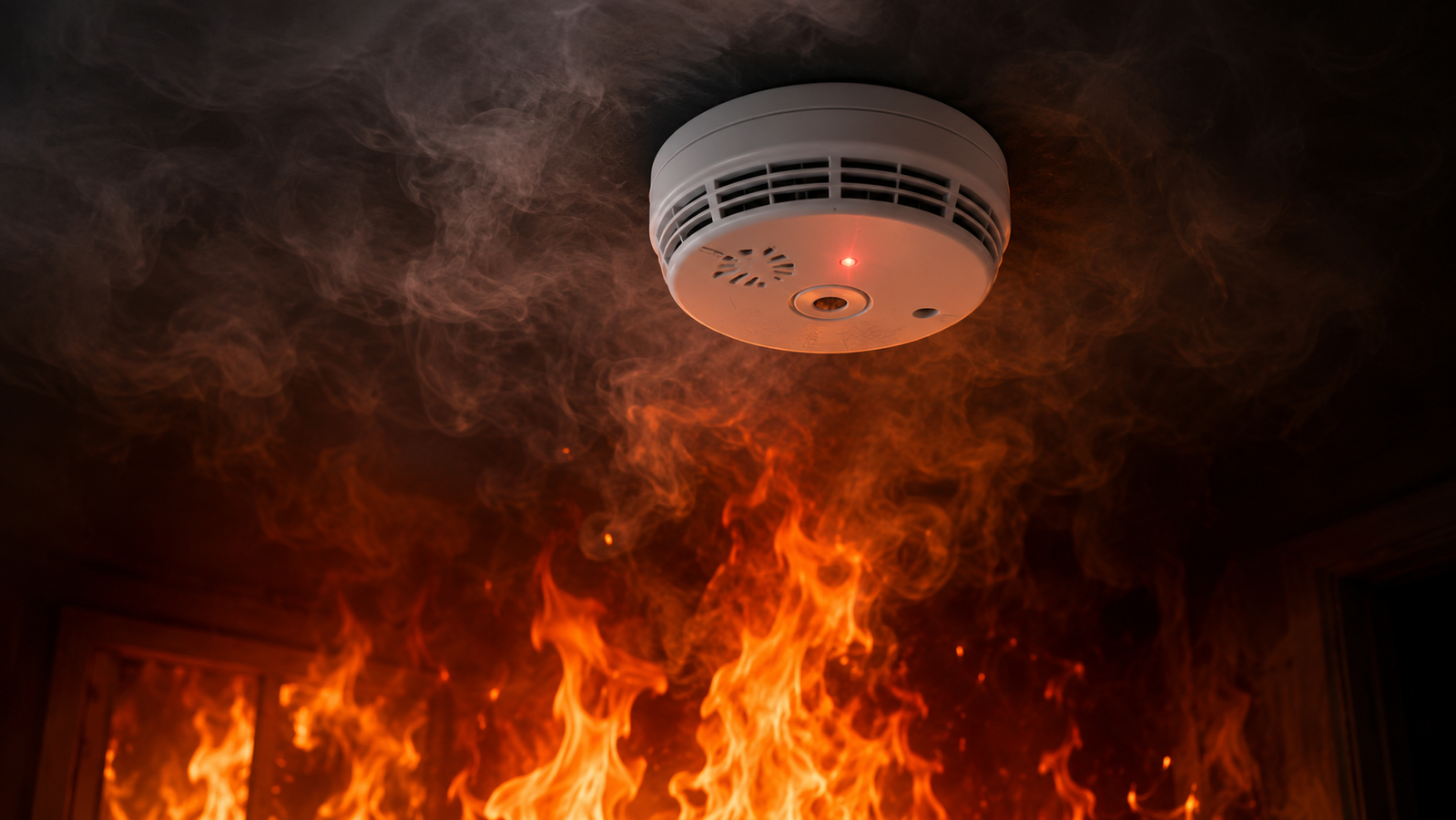
You wake to the smell of smoke, someone yelling, or intense heat inside your rental home or apartment. The smoke detector did not warn you in time. It may not have sounded at all, or you may later learn that the alarm was missing, disconnected, damaged, or no longer functioning.
After a residential fire, you may be coping with serious injuries and questioning why the alarm did not provide an earlier warning.
A failed smoke detector may raise questions about premises liability, but it does not automatically mean that a landlord is legally responsible for a tenant’s injuries. The answer depends on why the alarm failed, who was responsible for its condition, and whether an earlier warning could have changed what happened.
Answering those questions may require reviewing the alarm, the property’s maintenance history, reports of prior problems, and evidence showing how the fire progressed.
When Can a Failed Smoke Detector Lead to a Liability Claim?
A claim generally turns on whether the landlord or another responsible party had a duty to install, maintain, repair, or replace the alarm and failed to take reasonable action. The evidence may show that a responsible party created the problem or knew, or reasonably should have known, that the alarm was not working properly.
The investigation begins by identifying who was responsible for the alarm and why it did not work. It also examines whether anyone had reported the problem, whether an inspection or repair visit should have revealed it, and whether the missing warning affected the tenant’s ability to escape.
New Jersey imposes smoke-alarm requirements on residential properties, but the rules that apply can depend on the type and configuration of the building. Those requirements may address the number, placement, power source, installation, and maintenance of alarms.
Because the applicable standards can differ, the property and the rules governing it must be evaluated rather than assuming that one requirement applies to every rental.
A safety-code violation can provide important evidence, but it does not automatically establish liability. The evidence must still show who was responsible for the condition and whether the missing or delayed warning contributed to the injuries.
Who Could Be Responsible for the Smoke Detector?
Identifying the applicable safety requirements is only part of the analysis. The next question is who was responsible for meeting them.
Property-management companies often handle complaints, inspections, repairs, and apartment turnover. Maintenance contractors or electricians may also install or service smoke alarms. In a larger building, responsibility for alarms inside individual units may differ from responsibility for fire-safety equipment in hallways and other common areas.
The lease can help identify maintenance responsibilities, but it rarely tells the entire story. Ownership records, management agreements, work orders, safety requirements, and the way the property was actually maintained can provide additional answers.
The investigation should identify who received complaints, conducted inspections, had access to the alarm, and had the authority to arrange a repair or replacement.
Why Might a Smoke Detector Fail to Provide a Warning?
The fact that an alarm did not sound does not, by itself, explain why it failed.
An alarm can fail to provide a warning for several reasons. The unit may have lacked power or been disconnected, removed, covered, damaged, improperly installed or placed, or left in service beyond its expected lifespan. In other situations, the alarm or one of its components may have malfunctioned.
The cause should not be assumed. Fire-investigation findings, photographs, witness accounts, maintenance records, and an examination of the device can help determine why it failed.
The investigation should also consider whether anyone removed a battery, disconnected the unit, covered it, or otherwise altered it before the fire.
How Can You Show That the Landlord Knew or Should Have Known?
Sometimes, the landlord received a direct warning that the alarm was not working. An email, text message, or maintenance request can show that the tenant reported an alarm that was missing, detached, repeatedly chirping, or failing a test.
Even without a direct complaint, the question becomes whether the problem should have been discovered through reasonable property management or maintenance.
A missing, detached, or damaged alarm could be visible during an inspection, repair visit, renovation, or turnover between tenants. The alarm’s label, installation records, or maintenance history could also show that it had remained in service beyond its expected lifespan. Records may reveal that the same issue had been reported before or that work involving the alarm was never completed.
To understand what the landlord or property manager knew and when, Sadaka Law reviews evidence such as emails, text messages, work orders, inspection reports, code notices, repair records, photographs, and statements from prior tenants.
Under New Jersey law, notice and control are central to many landlord premises liability claims. When the condition was inside an area controlled by the tenant and the landlord had no notice of it, establishing landlord responsibility can be more difficult.
The result still depends on the landlord’s duties, retained control, opportunity to discover the problem, and the circumstances surrounding the property and tenancy.
Did the Delayed Warning Contribute to the Injuries?
Establishing that the alarm failed is only part of the claim. The evidence must also connect the missing or delayed warning to the tenant’s injuries.
Investigators may examine where the fire began, how quickly smoke and heat moved through the building, whether another alarm sounded, when the occupants recognized the danger, which exits remained available, and when the injuries occurred.
A sleeping tenant can lose critical time when an alarm fails to sound. By the time the occupants recognized the danger, smoke may have obscured an exit or made it harder to help a child, older relative, or another person leave the building. Serious burns, smoke-inhalation injuries, and falls can occur during those efforts.
A working alarm cannot ensure that everyone will escape without injury. The issue is whether an earlier warning would likely have given the tenant more time to recognize the danger, reach an exit, or help another occupant, and whether the lost time contributed to the injuries.
What if the Fire Happened in an Airbnb or Short-Term Rental?
Similar questions can arise when a fire occurs in an Airbnb, vacation home, or another short-term rental.
The host may not be the only person whose responsibilities require investigation. The property owner, co-host, management company, or contractor may also have been responsible for inspecting the property, responding to reported problems, or maintaining its safety equipment.
The online listing and platform communications should be preserved. Airbnb instructs hosts to disclose whether smoke and carbon monoxide alarms are present. It also states that alarms identified as present need to be in working order and that hosts should test them regularly. Those records may help show what guests were told about the property’s safety features.
Airbnb’s requirements can provide useful context, but they do not determine legal liability. The analysis still depends on the laws governing the property, who was responsible for the alarm, and whether its failure contributed to the injuries.
What Evidence Should Be Preserved After a Rental-Property Fire?
Evidence can disappear quickly. A building may be secured, cleaned, repaired, or demolished soon after the fire. Alarms and electrical components may be removed, online listings can change, and electronic communications can become harder to retrieve.
Important evidence may include:
- Photographs and videos of the property
- The alarm, battery, wiring, or other components preserved by fire officials or investigators
- Fire department and incident reports
- Fire origin-and-cause reports or findings
- Inspection and code-enforcement records
- Maintenance requests and repair records
- The lease and related communications
- Witness names and contact information
- Medical records and photographs documenting the injuries
- Emails, texts, or other communications reporting the alarm problem
- Airbnb or short-term-rental listings and messages
You should not enter an unsafe building or interfere with evidence being held by fire officials or another investigating agency. An attorney can request records, identify who possesses important evidence, and take steps to prevent that evidence from being lost or altered.
Could the Smoke Alarm Itself Have Been Defective?
Investigating an alarm failure generally requires examining the device’s power source, placement, installation, maintenance, and any evidence that it was removed or altered. If those explanations do not account for the failure, investigators can evaluate whether the alarm malfunctioned despite proper installation, power, and maintenance.
A failure to sound does not automatically establish a product defect. Evaluating that possibility requires examining the alarm and its components, maintenance history, and the conditions during the fire.
Reach Out to Sadaka Law if You Were Injured in a Serious Rental-Property Fire
After a serious fire, medical care and displacement can leave little time to investigate why the alarm did not provide a timely warning.
Sadaka Law carefully investigates serious New Jersey injury claims to understand why the alarm failed, who was responsible for its condition, and whether the delayed warning contributed to the injuries. Our attorneys review property and maintenance records, fire-investigation findings, alarm evidence, witness accounts, and medical documentation to build a clear picture of what occurred.
If you or a loved one was seriously injured in a rental-property fire involving a missing or failed smoke alarm, contact Sadaka Law for a free consultation. We will listen to what happened, explain your legal options, and discuss the steps available to preserve important evidence and protect your rights.
Disclaimer: The results of any legal matter depend on its specific facts and circumstances. This article is provided for informational purposes only and does not constitute legal advice or create an attorney-client relationship. Contact Sadaka Law directly if you need advice about your situation.