

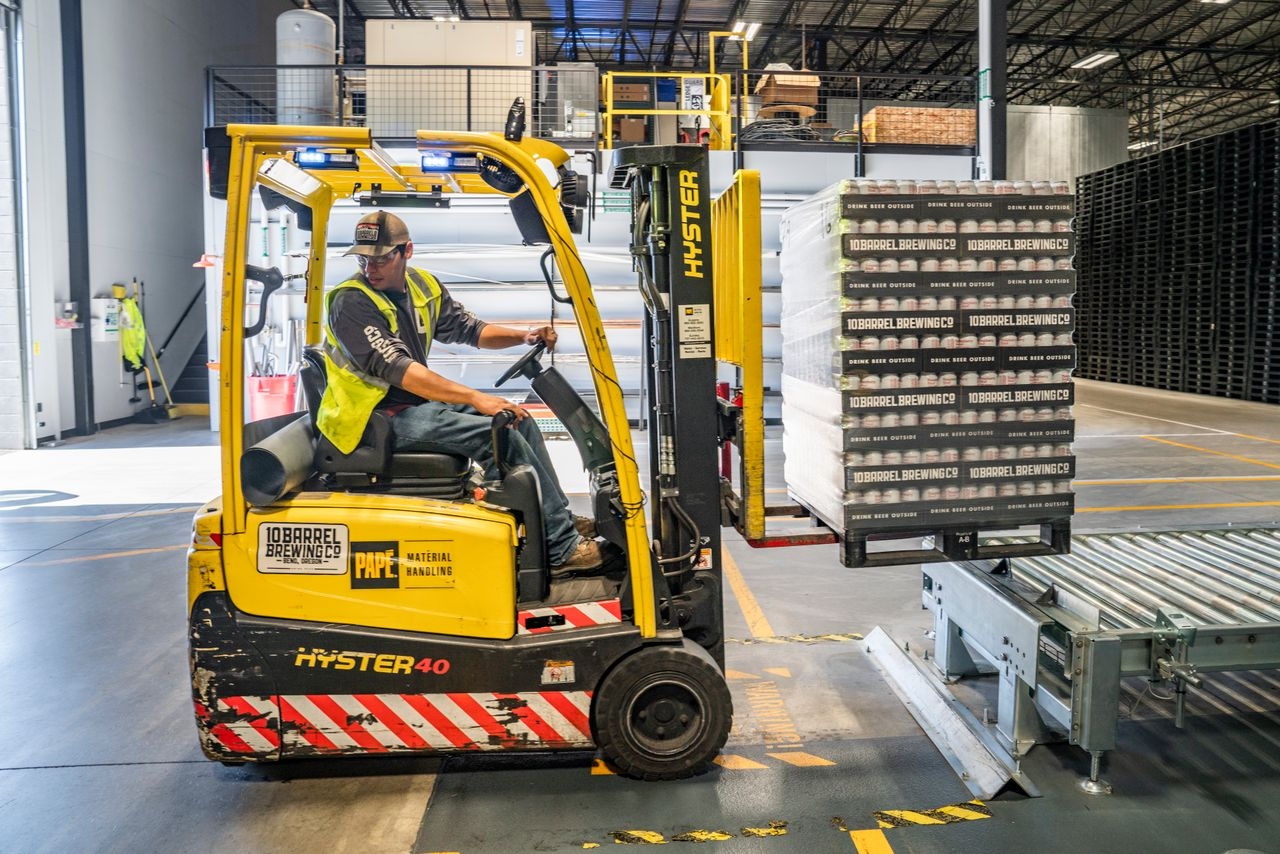
You are working your shift when a forklift backs into you, a load falls, a lift tips over, or equipment fails near a loading dock. Suddenly, you are dealing with an injury that could keep you away from work for weeks, months, or longer.
Your employer tells you the accident will go through workers’ compensation. That makes sense because you were hurt on the job.
But workers’ compensation does not always answer every legal question after a serious workplace accident.
In New Jersey, workers’ compensation generally provides benefits for employees injured in the course of their work without requiring them to prove that the employer caused the accident. At the same time, some forklift accidents involve a person or company other than the injured worker’s employer.
When that happens, the next question is whether a separate third-party injury claim exists.
What Does Workers’ Compensation Cover After a Forklift Accident?
New Jersey workers’ compensation is a no-fault system.
According to the New Jersey Division of Workers’ Compensation, eligible employees injured in work-related accidents can receive benefits that include necessary medical treatment, temporary disability benefits when applicable, and compensation for qualifying permanent disability.
You generally do not have to prove that your employer was negligent to receive those benefits.
In exchange for those benefits, an employee generally cannot bring a civil lawsuit against the employer for pain and suffering or other damages, except in limited circumstances involving intentional conduct.
That is why many injured workers hear some version of:
“This is a workers’ comp case.”
Sometimes that is the whole picture.
Sometimes it is not.
When Can a Forklift Accident Involve a Third-Party Claim?
A third-party claim focuses on a person or company that may be legally responsible for the injury but is not protected from a separate lawsuit by the workers’ compensation system.
New Jersey law allows an injured employee to pursue a separate claim against a third party whose conduct contributed to the work injury or whose defective product caused or contributed to it, even when workers’ compensation benefits are also available.
The state’s third-party liability statute addresses what happens when someone outside the employer-employee relationship is legally responsible for a work injury.
In a warehouse or industrial setting, that distinction can become important because several businesses can be working in the same location.
For example, a forklift accident could raise questions about:
- A forklift owned, leased, or maintained by another company
- A defective component or safety system
- An outside contractor operating equipment in the warehouse
- A delivery company or truck driver involved in loading or unloading
- A property owner responsible for a dangerous loading dock or floor condition
- A maintenance company that serviced the forklift or related equipment
The fact that another company was present does not automatically create liability.
The investigation has to identify what actually caused the accident and whether another person or business contributed through negligent conduct, defective equipment, or another legally recognized basis for responsibility.
Why a Forklift Accident Can Involve More Than the Driver
A forklift collision can look simple from across a warehouse floor.
A driver turned too quickly. A worker stepped into an aisle. A load shifted.
But serious forklift accidents often involve more than the final few seconds before impact.
The federal Occupational Safety and Health Administration identifies multiple hazards involving powered industrial trucks, including workers being struck by forklifts, falling loads, trucks driving off loading docks, and forklifts falling between docks and unsecured trailers.
OSHA requires employers to ensure that forklift operators are properly trained and evaluated for the equipment and workplace conditions involved. OSHA’s forklift guidance explains that workplace conditions and the type of equipment being used can change the hazards involved.
That makes questions such as these important:
- Was the operator properly trained for that type of forklift?
- Was the forklift inspected before it was used?
- Were the brakes, steering, warning devices, or other components working?
- Was the load within the machine’s rated capacity?
- Were pedestrians and forklifts routed through the same area?
- Was visibility blocked?
- Was a loading dock, trailer, ramp, or floor condition involved?
- Had the forklift been repaired or serviced before the accident?
The answers can help establish what caused the accident and whether the circumstances point to a potentially responsible third party.
What Evidence Can Matter After a Warehouse Forklift Injury?
Warehouses generate records.
Some of those records can become important after a serious workplace injury.
Depending on the accident, relevant evidence can include:
- Surveillance video
- Forklift inspection records
- Maintenance and repair records
- Operator training documents
- Incident reports
- Photographs of the equipment and scene
- Warehouse traffic or pedestrian plans
- Loading and unloading records
- Witness statements
- Communications about earlier equipment problems
- Information identifying who owned, leased, operated, or maintained the forklift
The physical condition of the equipment can matter too.
If a forklift is repaired, returned to a leasing company, moved to another facility, or put back into service, evidence of its condition at the time of the accident can become harder to reconstruct later.
That is one reason a serious warehouse accident deserves a careful investigation rather than an assumption about what happened based only on an initial incident report.
At Sadaka Law, we pay close attention to this kind of evidence because it can help show who controlled the equipment, who maintained it, and what happened before the accident.
Can You Receive Workers’ Compensation and Still Bring a Third-Party Claim?
In appropriate cases, yes. Receiving workers’ compensation benefits does not necessarily prevent you from pursuing a separate claim against a responsible third party.
Still, the two claims do not operate independently.
Under N.J.S.A. 34:15-40, an employer or workers’ compensation carrier may be entitled to reimbursement for certain benefits already paid or a credit against future benefits when an injured worker recovers money from a responsible third party. The amount depends on the recovery and applicable deductions, including certain legal expenses.
Workers’ compensation and a personal injury claim also address damages differently. A third-party claim can include losses that workers’ compensation does not compensate in the same way, including pain and suffering when the facts support liability.
Because the two systems can affect one another, it is important to understand both before resolving either claim.
What Should You Do After a Serious Forklift Accident?
Your first priority is getting appropriate medical care.
Notify your employer about the injury as soon as possible. In New Jersey, notice can be given to a supervisor, personnel office, or another person in authority at the workplace, and it does not have to be in writing. If you need treatment, ask your employer for medical care.
Under New Jersey workers’ compensation rules, the employer or its insurance carrier generally selects the authorized medical provider, although different rules can apply in an emergency or when treatment is improperly refused.
Make sure the basic details of what happened are accurately documented. If you are able, preserve information that could later matter:
- Names and contact information for witnesses
- Photos of the forklift and surrounding area
- The forklift number or other identifying information
- The names of companies working in the area
- Details about any mechanical problem you noticed
- Copies of documents you receive about the accident
Do not assume that you need to determine who was legally responsible on your own.
The important first step is preserving enough information to allow that question to be answered.
After a Serious Forklift Injury, Make Sure the Full Picture Is Examined
A serious forklift accident can affect your ability to work, care for your family, and return to the physical demands of a warehouse or industrial job.
Workers’ compensation can be an important part of that picture. But when a person or company outside the employer-employee relationship contributed to the accident, it is also important to understand how the injury happened and whether a separate claim exists.
At Sadaka Law, we investigate serious workplace injuries by looking beyond the initial accident report to the equipment, worksite conditions, maintenance and training records, companies involved, and the sequence of events that led to the harm. We do not assume that every forklift accident creates a third-party case, and we do not assume that workers’ compensation tells the whole story.
If you were seriously injured in a forklift accident at a warehouse, shipping facility, construction site, or another workplace in New Jersey, contact Sadaka Law. We can review what happened, explain how workers’ compensation and potential third-party issues fit together, and help you understand the options available based on your circumstances.
Disclaimer: Results may vary depending on your particular facts and legal circumstances. The articles on this blog are for informational purposes only and are no substitute for legal advice or an attorney-client relationship. If you are seeking legal advice, please contact our law firm directly.