

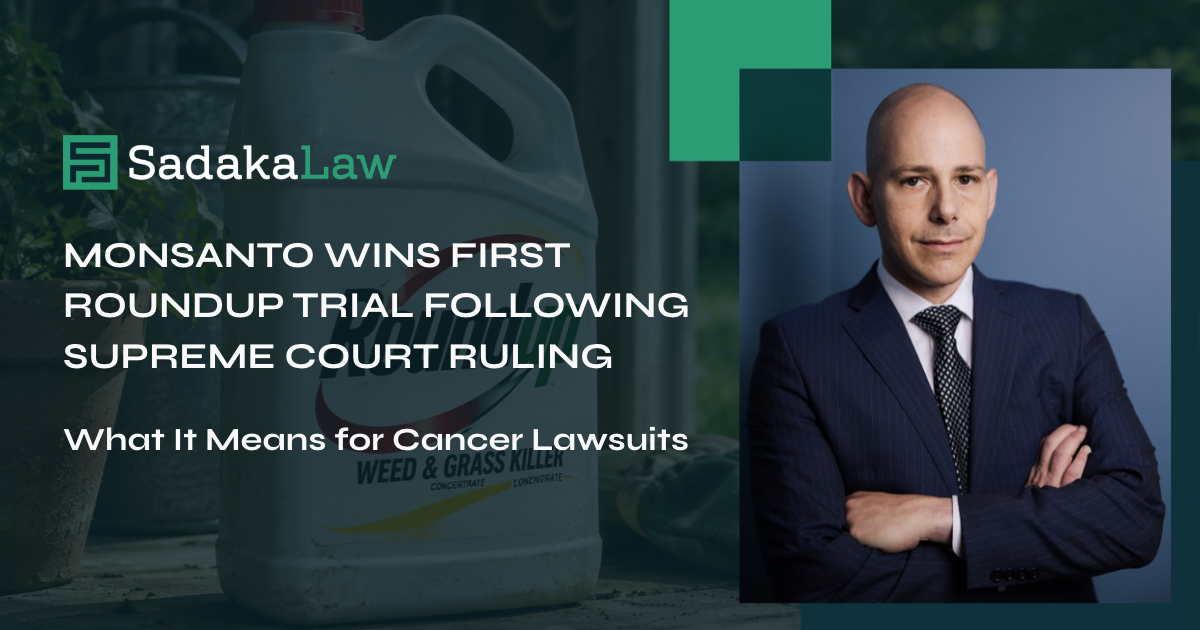
A major legal development in the ongoing Roundup litigation could have significant implications for individuals pursuing claims against Monsanto.
On October 29, 2026, a Missouri jury unanimously ruled in favor of Monsanto in the first Roundup cancer trial following the U.S. Supreme Court’s June decision in Monsanto v. Durnell. The case involved three women who alleged that exposure to Roundup, a glyphosate-based herbicide, caused them to develop non-Hodgkin’s lymphoma.
The plaintiffs sought between $10 million and $30 million each in damages. However, after deliberating for less than two hours, the jury rejected their claims.
How the Supreme Court Changed Roundup Litigation
In June 2026, the U.S. Supreme Court ruled that federal pesticide law, known as the Federal Insecticide, Fungicide, and Rodenticide Act (FIFRA), preempts certain state-law failure-to-warn claims involving Roundup.
Specifically, the decision limits claims alleging that Monsanto should have included a cancer warning on its product label when the warning would conflict with federal labeling requirements.
Failure-to-warn claims have historically played a central role in Roundup litigation. The ruling therefore represents a significant shift in how plaintiffs may pursue these cases.
What Happened in the Missouri Trial?
With failure-to-warn claims restricted, the plaintiffs in this case pursued other legal theories, including design defect, negligence, and fraud.
The trial focused on whether the scientific evidence and other facts could establish that Monsanto was liable for the plaintiffs’ alleged injuries.
Ultimately, the jury found in Monsanto’s favor on all claims. The verdict highlights the challenges plaintiffs may face when attempting to establish liability following the Supreme Court’s decision.
What Does This Mean for Individuals Affected by Roundup?
Although this verdict is a significant development, it does not automatically resolve all pending Roundup lawsuits.
Thousands of claims involving alleged glyphosate exposure and non-Hodgkin’s lymphoma remain part of the broader litigation. The impact of the Supreme Court’s decision and subsequent trial outcomes will depend on the specific facts and legal theories involved in each case.
For individuals who believe their cancer diagnosis may be connected to exposure to Roundup or other potentially harmful products, understanding their legal options is important.
At Sadaka Law, we understand that pursuing a product liability claim can be overwhelming, particularly when you or a loved one is facing a serious illness.
Our firm is committed to helping individuals understand their rights and explore whether they may have a viable legal claim.
If you or someone you love has been diagnosed with non-Hodgkin’s lymphoma following exposure to Roundup, contact Sadaka Law to learn more about your potential legal options.
Disclaimer: The articles on this blog are for informational purposes only and are no substitute for legal advice or an attorney-client relationship. If you are seeking legal advice, please contact our law firm directly.