

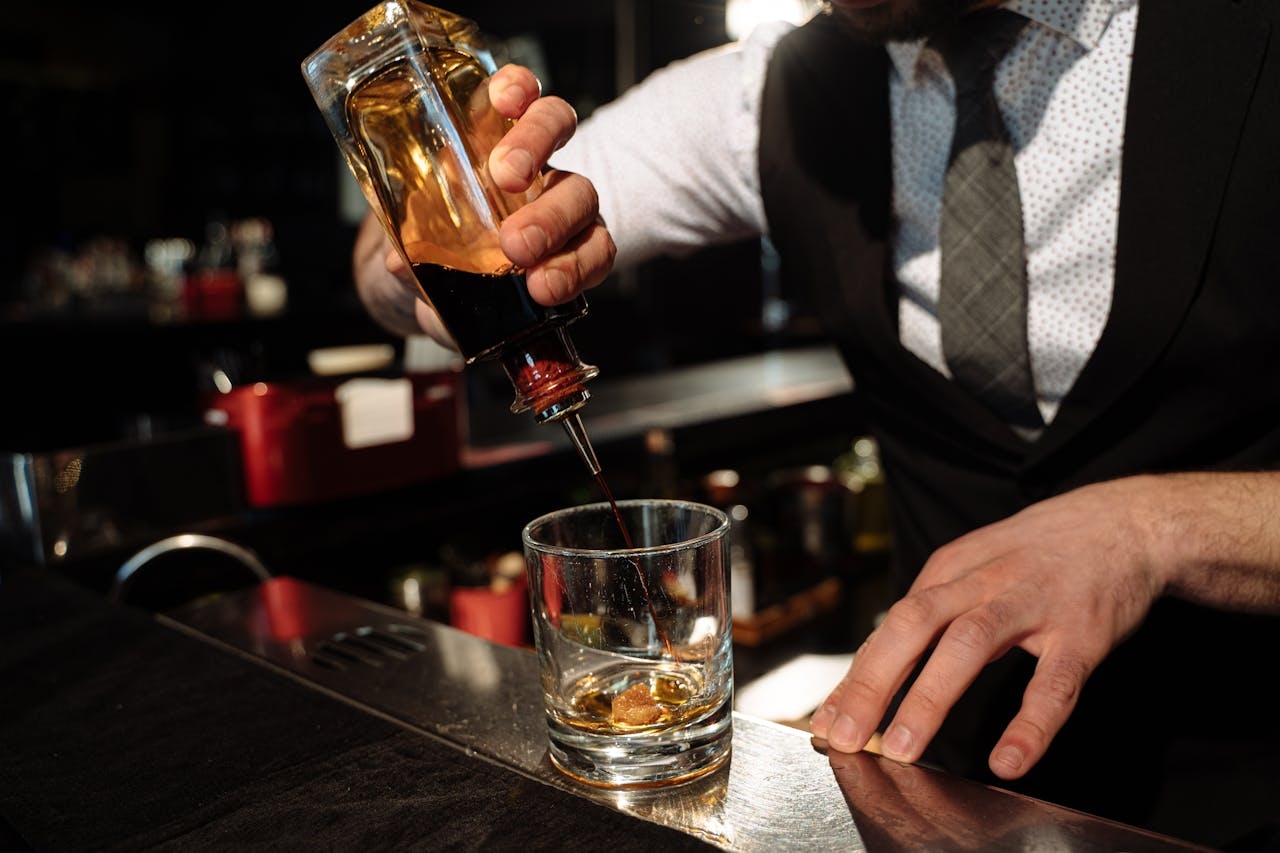
The accident happened in seconds. But in some cases, the events that led to it began hours earlier inside a bar, restaurant, banquet hall, or other alcohol-serving establishment in North Jersey, where staff may have continued serving a patron who was showing clear outward signs of intoxication.
By the time your car was hit, or your loved one was taken by ambulance, you may already be facing medical bills, lost income, and difficult questions about where compensation may come from and who may be legally responsible.
We have seen this scenario play out for injured people and their families across Northern New Jersey and beyond. And we want you to know something important: the drunk driver may not be the only party that may bear legal responsibility for what happened.
Under New Jersey law, a licensed alcohol-serving establishment that served that driver may also face civil liability for your injuries. This area of the law is called dram shop liability, and it can be an important avenue of recovery for injured people and families in New Jersey.
What Is Dram Shop Liability in New Jersey?
The phrase sounds old-fashioned because it is. A "dram shop" was a colonial-era term for a place that sold alcohol by the dram, a small unit of measurement. Today, dram shop liability refers to the legal responsibility that licensed alcohol vendors, including bars, restaurants, nightclubs, banquet halls, and similar establishments, can bear when they serve alcohol to a person who is visibly intoxicated and who goes on to injure someone else.
New Jersey’s dram shop liability law is set out in a specific statute that defines when a licensed alcohol server may be held civilly liable. The statute places potential liability on licensed servers when they continue serving a visibly intoxicated person or serve a minor under the circumstances described by the Act. When a licensed server continues serving a visibly intoxicated person, New Jersey law may allow an injured person to seek compensation if that negligent service proximately caused the injury and the injury was a foreseeable consequence of that service.
If you were injured by a drunk driver in New Jersey, determining whether a licensed alcohol server contributed to the accident can affect the parties involved, the insurance coverage available, and the potential value of your claim. It may also affect whether there is a meaningful source of recovery beyond the drunk driver’s own insurance coverage.
New Jersey’s Licensed Alcoholic Beverage Server Fair Liability Act
New Jersey’s dram shop law is codified at N.J.S.A. 2A:22A-1 et seq. and is known as the Licensed Alcoholic Beverage Server Fair Liability Act. Under the Act, an injured person generally must show that the licensed server was negligent, that the negligent service proximately caused the injury, and that the injury was a foreseeable consequence of that negligent service.
A licensed server is deemed negligent when it serves a visibly intoxicated person, or when it serves a minor under circumstances in which the server knew or reasonably should have known the person was underage.
In practical terms, this means that if a bartender in Fort Lee, Hackensack, Jersey City, Newark, or anywhere else in North Jersey kept serving drinks to someone who was clearly impaired, and that person then got behind the wheel and injured you, that establishment may also need to be investigated as a potential defendant under New Jersey’s dram shop statute, if the facts support the required elements of the claim.
If a drunk driving crash led to the death of a loved one, related claims such as wrongful death and, in some situations, survival claims may also need to be evaluated.
This matters for a practical reason as well: the drunk driver may not be the only source of recovery. In some cases, commercial insurance carried by a bar, restaurant, or event venue may also be relevant, which is one reason a prompt investigation matters.
Who Can Be Held Liable Under New Jersey's Dram Shop Law?
Licensed alcoholic beverage servers in New Jersey may face liability under the Act when the statutory elements are satisfied. In our experience, the most common establishments involved in these claims include:
- Bars and taverns
- Restaurants with liquor licenses
- Nightclubs and entertainment venues
- Banquet halls and catering facilities
- Hotels and country clubs
- Sports bars and event venues
If the driver who injured you had been drinking somewhere before the accident, that establishment should be evaluated promptly under New Jersey’s dram shop law if the facts support the required elements of the claim. We investigate this question thoroughly from the outset because identifying every potentially responsible party is an important part of building a strong claim.
What You Need to Prove in a New Jersey Dram Shop Case
Dram shop cases require building a specific evidentiary record. To succeed against an alcohol-serving establishment under New Jersey law, three core elements generally need to be established.
The establishment was a licensed alcohol vendor.
This is often one of the more straightforward elements to confirm through licensing records and other public documentation. If an establishment was selling alcohol under a New Jersey license, that status may bring it within the scope of the Licensed Alcoholic Beverage Server Fair Liability Act.
The establishment served alcohol to a visibly intoxicated person.
This is often one of the most heavily contested issues in these cases. “Visibly intoxicated” is a legal standard, not just a casual impression. Under New Jersey law, it refers to intoxication accompanied by a perceptible act or a series of acts that present clear signs of intoxication. Depending on the facts, those signs may include slurred speech, stumbling, impaired coordination, erratic behavior, or other outward indicators that a person appeared plainly impaired.
Evidence that may help establish that the person was visibly intoxicated can include surveillance footage, witness statements, transaction records, social media posts from the evening, and police or toxicology evidence developed after the crash.
Insurance defense teams often argue that the server had no reasonable basis to recognize visible intoxication. Our role is to investigate the facts and build the strongest evidentiary record the case will support.
The intoxication was a proximate cause of your injuries.
A dram shop claim also requires proof that the negligent service of alcohol was a proximate cause of the crash and the injuries that followed. In practical terms, that means showing a legally sufficient connection between the establishment’s service of alcohol and the chain of events that led to the harm. In some cases, that issue is straightforward. In others, it requires careful investigation, witness development, record collection, and a clear presentation of the evidence.
Why These Cases Are Harder Than They Look, and Why Preparation Is Everything
Here is something many injured people do not realize right away: licensed alcohol establishments often carry commercial insurance that may be relevant to a dram shop claim. Their insurers may challenge whether the patron appeared visibly intoxicated at the time of service, argue that staff had no reason to cut anyone off, and dispute the causal connection between service and the crash.
In our experience, these claims are often contested from the outset. Surveillance footage is often not preserved or produced without prompt action to request that it be retained. Insurers representing well-resourced establishments may dispute liability, contest damages, and seek to limit what they pay, particularly in the early stages of a claim.
These cases often turn on preparation, evidence, and timing. That is why Sadaka Law focuses on early investigation, documentation, and thorough case development. When we are retained promptly, we move quickly to preserve evidence, issue preservation notices, identify witnesses, and seek records that may help establish what happened.
We also understand that dram shop cases frequently involve layered insurance coverage. The drunk driver may have a personal auto policy. The establishment may have commercial coverage that applies. In some cases, there may also be excess or umbrella coverage. In serious injury cases, identifying and pursuing every available layer of coverage can be critical to seeking full available compensation.
The Clock Is Already Running: Why Timing Matters in a Dram Shop Case
New Jersey generally applies a two-year statute of limitations to most personal injury claims arising from drunk driving accidents, although exceptions and case-specific timing issues can affect deadlines. But in dram shop cases, the filing deadline is only part of the problem. Key evidence can disappear quickly. Surveillance footage may be overwritten. Witness memories can fade. Transaction records and other evidence showing where the driver was served and in what condition may become harder to obtain with delay.
If you were hurt by a drunk driver in New Jersey, it is wise to act quickly. Learning whether a dram shop claim may be available to you usually starts with a prompt case review. But waiting to investigate that question can make key evidence harder to preserve and the claim harder to evaluate.
What to Do After a Drunk Driving Accident in North Jersey
If you or a loved one was injured by a drunk driver in North Jersey, here are some important steps to take right away:
- Get medical care immediately: Even if you believe your injuries are minor, see a doctor as soon as possible. Shock and adrenaline mask pain. Traumatic brain injuries, internal injuries, soft tissue injuries, and other serious medical issues may not be fully apparent right away and may be missed without a professional evaluation. The gap between an accident and your first medical visit can be used against you during the claims process.
- Get a copy of the police report: If the responding officer noted signs of intoxication, observed the smell of alcohol, or administered field sobriety testing, that documentation may become important evidence in your case. Request the report as soon as it becomes available.
- Try to piece together where the driver had been: Did the driver mention where they came from? Did a witness overhear something? Is there information that places them at a specific venue? Even a partial picture can be valuable. Our team knows how to investigate the rest.
- Be cautious about giving a recorded statement before speaking with an attorney: In some situations, especially when your own insurer is involved, policy obligations and strategic considerations may matter. It is usually best to understand your rights and any policy-related responsibilities before giving a recorded statement.
- Contact a New Jersey dram shop lawyer as soon as possible: When you reach out to Sadaka Law, we will evaluate your case and give you a clear picture of what options may be available to you. If a dram shop claim appears viable, we will explain why and discuss what building that case would likely involve. If it does not, we will tell you that too. Either way, the conversation costs you nothing.
How Sadaka Law Handles Dram Shop Claims
Dram shop cases are often more complex than standard auto accident claims because they may involve multiple defendants, layered insurance issues, and fact-intensive questions about service, visible intoxication, and causation. At Sadaka Law, we approach these matters with a focus on early investigation, careful evidence development, and a clear understanding of what is at stake for the people involved.
Working with counsel familiar with New Jersey dram shop litigation can matter because these cases often involve issues beyond an ordinary auto-accident claim. These matters can require an understanding of layered insurance coverage, causation evidence, toxicology issues, and multi-defendant litigation, along with the ability to develop a strong factual record when liability is contested.
Our founding attorney, Mark T. Sadaka, brings a background that includes a Master of Science in Public Health, experience in toxicology and risk assessment, and decades of trial experience in complex litigation. When we evaluate a dram shop case, we focus on developing the facts through records, witness testimony, and other available evidence rather than relying on assumptions about the patron’s condition or what staff may have observed.
Our firm’s broader litigation background includes complex matters involving product liability, pharmaceutical injuries, and mass tort litigation. The clients who come to us often face opponents with considerable resources and every incentive to limit what they pay. Those are the kinds of complex cases our firm handles.
We handle these matters on a contingency fee basis, which means there is no attorney’s fee unless we recover compensation for you. There is no upfront cost to speak with us, and waiting can make evidence harder to preserve and claims harder to evaluate.
Hurt by a Drunk Driver in North Jersey? Sadaka Law Can Help You Evaluate Your Options
If you or someone you love was hurt by a drunk driver in North Jersey, do not assume the driver is the only potentially responsible party. Depending on the facts, a bar, restaurant, or event venue may also face civil liability under New Jersey law.
Sadaka Law offers free consultations and handles injury matters on a contingency fee basis, which means there is no attorney’s fee unless we recover compensation for you. We represent injured people throughout Bergen, Hudson, Essex, Passaic, and Morris Counties, and across New Jersey.
Call Sadaka Law today at 201-338-7326, or reach out online to schedule your free case review.
Disclaimer: This article is for informational purposes only and does not constitute legal advice. Reading it does not create an attorney-client relationship. For advice about your specific situation, please contact an attorney directly.